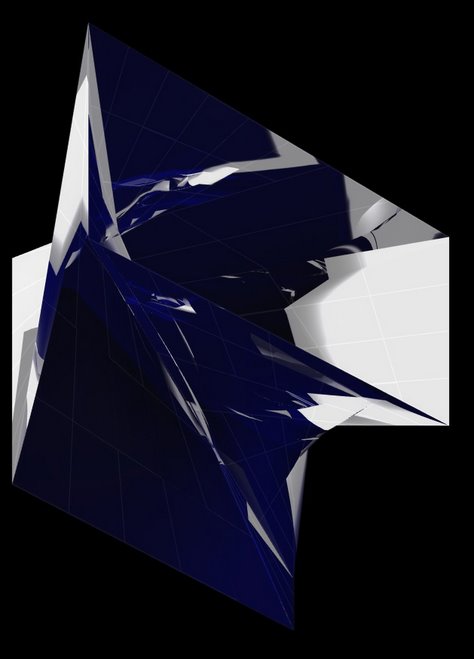
Still needs work, but here is the beginning of the first piece of the series: "The Grotesque".


*Opening Credits: “How Many More Times” by Led Zeppelin (starting it off with some class, some swing, and a really long ass set of credits:8:27)
*First Day At School: “Derelict” by Beck (I was tripping balls on my first day of school)
*Falling In Love: “Fascination Street” by The Cure (Dark/obsessive lyrics, heavy/raw music, sounds like my early love life)
*Breakin Up: “Break & Enter” by The Prodigy (longest break up ever: 8:23 – really happy when it was over, the relationship and the song)
*Prom: “Walk Away” by Franz Ferdinand (walk away?!, what a shitty title for a prom song)
*Sex scene: “4 Degrees” by Tool (guess since my prom date walked away, I hooked up with a goth chick and she was into some kinky stuff)
*Life's Ok: “God’s Away On Business” by Tom Waits (this is my life is okay song!?! This movie is not heading towards a happy ending)
*Mental Breakdown: “Devil’s Haircut” by Beck (hmm, during a mental breakdown I get a haircut…I think I saw this the first time in “Taxi Driver”)
*Driving: “Stop, Stop, Stop” by The Hollies (this song is actually about a stripper, not a car, but it does built a certain degree of intensity mid movie))
*Flashback: “I’m The Man Who Loves You” by Wilco (good title for a flashback song, though it is a pretty sedated song for this list)
*Getting Back Together: “Boy Named Sue” by Johnny Cash (apparently I had a falling out with my father that was simply alluded to, but never fully expressed until this moment in the movie)
*Birth of Child: “The New Romance” by Pretty Girls Make Graves (okay…kinda fits. Oh yeah, and I must have had a hell of a lot of sex before she got pregnant in the basement, rooftop, etc.)
*Wedding Scene: “Furious Angels” by Rob Dougan (wow, this is going to be a great marriage)
*Final Battle: “El Phantasmo And The Chicken-Run Blast-O-Rama” by White Zombie (oh hell yes.)
*Death Scene: “The Private Psychedelic Reel” by The Chemical Brothers (a really interesting and pretty great death scene song, oh yeah, and its only
*Funeral Scene: “Seed” by Paloalto (Straight out of the O.C. my loved ones come to mourn my passing…I got this album from Tim for my sister, I swear to god…)
*End Credits: “Sweat” by Tool (My movie ends the way my soundtrack scripted it: Raw, Heavy, Pissed)
May 22, 2007 — It sounds crazy, but as the universe expands faster and faster, it will eventually get to a point where the cosmos seen through a telescope will look a lot smaller than today, say physicists.
That's because in a few hundred billion, or perhaps a few trillion years, all but our local group of galaxies will have moved so far away they will be lost forever.
As a result, any cosmologist of that distant time who tries to figure out the history of the universe will have no clue to the Big Bang or the existence of the vast clusters of galaxies we can see today in every direction with powerful telescopes. Not even the microwave background radiation — the subtle and surest sign of the Big Bang — will remain within reach.
"They'll still be out there," said cosmologist Lawrence Krauss of Case Western Reserve University. "But space will be expanding faster than the speed of light," and so the light from those galaxies will never reach us again.
This is possible despite the universal speed limit being that of light, Krauss said, because the galactic clusters won't actually be moving; it's the space between them that will be expanding at a rate faster than light can traverse it.
Krauss and Vanderbilt University physicist Robert Scherrer have written a paper on the matter, which will appear in the October 2007 issue of the Journal of Relativity and Gravitation.
The cause of all this is the bizarre but critical component of the universe called dark energy.
Dark energy is the growing tendency of empty space to spontaneously create more empty space — thereby distancing anything in the universe that's not bound together with gravity. No one can fully explain dark energy, but without it the universe we see today makes no sense.
"We know it's allowed (by physics), but we have no idea what it is," said University of Michigan cosmologist Fred Adams, co-author of the book "The Five Ages of the Universe."